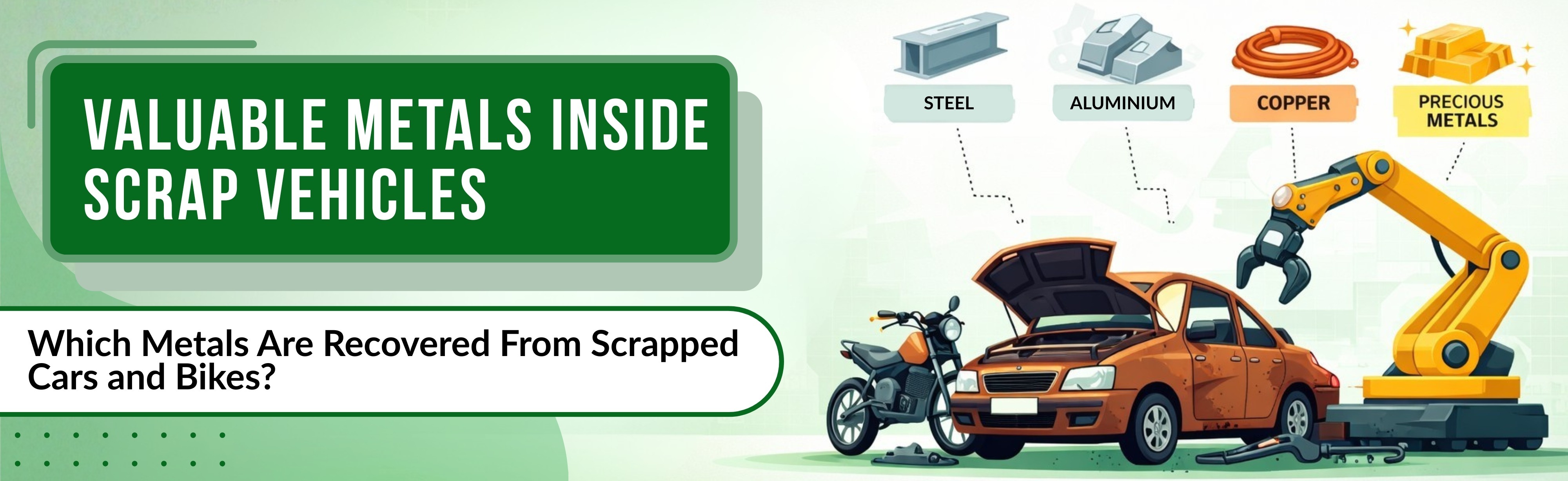
When a vehicle reaches the end of its usable life, many people assume it simply becomes scrap metal. In reality, modern scrapping is a highly engineered industrial process focused on Metal Recovery. Nearly 85-90% of a typical vehicle can be recycled, and a significant portion of that value comes from recovered metals.
Today, Metal Recovery is not just about dismantling a car or bike-it is about reclaiming valuable resources, reducing environmental damage, and supporting a circular economy. With rising raw material costs and sustainability pressures, recovering metals from scrapped vehicles has become an essential part of global supply chains.
Understanding which metals are recovered-and how-helps vehicle owners appreciate the true value of responsible scrapping.
Table of Content
Modern vehicles are complex machines composed of multiple metals, alloys, and engineered materials. If these materials are not properly recovered, they end up in landfills or informal recycling systems that cause environmental harm.
According to industry estimates, the automotive sector accounts for nearly 30% of global steel consumption. Efficient Metal Recovery directly reduces dependence on mining.
In India, with increasing enforcement around authorized scrapping facilities, Metal Recovery is becoming more structured and environmentally controlled.
The Metal Recovery process follows several technical steps:
Steel and iron make up 55-65% of a typical car’s weight.
Recovered From:
If your BS3 vehicle is over the age limit, it is effectively non-compliant.
Steel is highly recyclable and can be reused indefinitely without losing strength.
Why it matters:
Aluminum constitutes about 8-12% of modern vehicles, and its usage is increasing in newer models.
Recovered From:
Aluminum Metal Recovery is extremely energy-efficient compared to mining bauxite ore.
Copper plays a vital role in vehicle electrical and electronic systems.
Recovered From:
Electric vehicles contain up to four times more copper than conventional vehicles, increasing the importance of copper Metal Recovery.
Lead is mainly present in:
Lead recycling rates are among the highest globally (above 95% in structured systems).
Proper Metal Recovery prevents lead contamination, which can be extremely hazardous.
Zinc is used in:
Zinc Metal Recovery ensures corrosion-resistant materials can be reused in construction and automotive manufacturing.
Modern vehicles contain small but valuable quantities of precious metals.
Catalytic converters contain:
These metals help reduce emissions.
Though present in small quantities, they are extremely valuable. PGM Metal Recovery has become a specialized industry due to high global demand.
As electric vehicles become more common:
Battery Metal Recovery is one of the fastest-growing recycling sectors globally.
Experts predict that by 2030, battery metal recovery will be essential to meet EV production demand.
While both involve Metal Recovery, there are structural differences.
| Factors | cars | Bikes |
|---|---|---|
| Metal Volume | higher | Lower |
| Steel Content | Significant | Moderate |
| Aluminum Usage | Growing | Limited |
| Precious Metals | Catalytic converters | Smaller quantities |
| Battery Size | Larger | Smaller |
Cars contribute more to large-scale Metal Recovery due to size and component complexity. However, two-wheelers also add significant recyclable material in high-volume markets like India
Each ton of recycled steel prevents roughly 1.5 tons of CO₂ emissions compared to new steel production.
Efficient Metal Recovery also reduces pressure on mining ecosystems.
When scrapping is done informally, these benefits are lost.
Registered Vehicle Scrapping Facilities follow applicable procedures for depollution, dismantling and handling vehicle waste. Mariinox helps vehicle owners connect with its network of facilities; the facility processing the vehicle is responsible for carrying out the relevant procedures.
Scrap value depends on:
Heavier vehicles generally yield higher value due to increased steel and aluminum content.
Copper and precious metal content also influence overall valuation.
Metal Recovery makes scrapping financially viable for owners rather than purely dispositional.
Authorized facilities typically follow:
Technology used:
Mariinox helps vehicle owners navigate the scrapping process through its network of Registered Vehicle Scrapping Facilities. The facility processing the vehicle handles the applicable scrapping procedures and material recovery in accordance with relevant requirements.
By 2035, recycled metals may account for a significant share of automotive raw material supply.
Metal Recovery is becoming a strategic resource industry, not just waste management.
Metal Recovery is the backbone of modern vehicle scrapping. From steel and aluminum to copper and platinum, scrap car and bikes provide valuable materials that fuel industries worldwide.
Efficient Metal Recovery:
Choosing authorized scrapping channels ensures that Metal Recovery is safe, regulated, and beneficial.
As sustainability becomes central to manufacturing, Metal Recovery will continue to play a critical role in shaping the future of mobility.
Get a free, no-obligation quote and see how much your old vehicle is really worth - without the stress of selling.
Up to 85-90% through proper Metal Recovery processes.
Steel is the most commonly recovered metal.
Yes, especially in catalytic converters.
Yes, higher metal content generally results in better scrap value.
Yes, it significantly reduces energy consumption and emissions compared to mining.
Option B, Mercury, is correct. Mercury is a toxic metal found in some vehicle components like HID headlights, displays, and switches. During vehicle scrapping, it is carefully removed before recycling to prevent environmental contamination and ensure safe disposal.
A bike number plate is more than just an identification mark-it is a mandatory r...
As vehicles age, there comes a point when keeping them on the road is no longe...
Our vehicle disposal experts are here to help you make the right decision.
Get the best value, legal protection, and environmental peace of mind
Don’t risk illegal scrapping! Only authorized facilities like ours can provide official certificates and legal protection.
